To further advance the China-U.S. joint education program in Industrial CAD and showcase the features of internationalized teaching as well as the achievements in practical training, the School of Optoelectronic Manufacturing of Zhejiang Industry & Trade Vocational College (ZJITC) successfully held a demonstration class on September 24. The class, which focused on machine vision inspection technology and incorporated industrial robot handling and sorting practices, attracted representatives from the U.S. Gateway Technical College and the North Carolina Education Society, as well as leaders of ZJITC. The program has become an important platform for enhancing international exchanges and professional development.
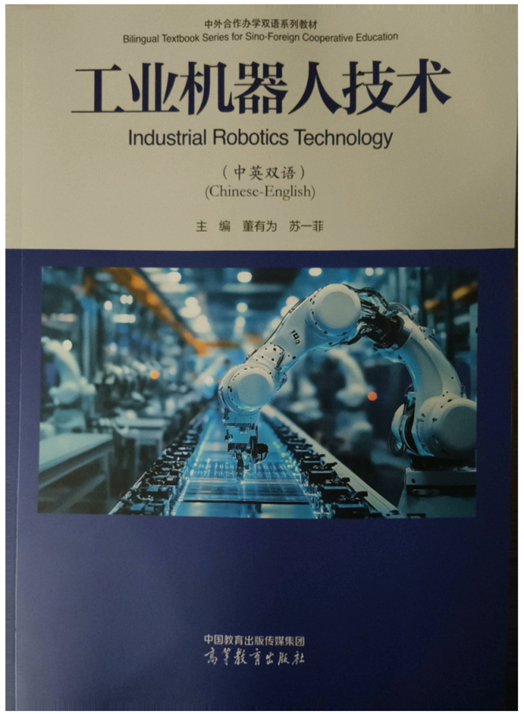
During the course preparation stage, a team of core faculty members collaborated on curriculum design. Based on China-U.S. curriculum standards, the team meticulously refined teaching process to integrate industrial robotics with machine vision inspection technology. Bilingual (Chinese-English) textbooks were adopted to combine American technical concepts with domestic industry needs, thereby fostering students’ professional competence and English proficiency. Meanwhile, the training facilities were upgraded, equipment was calibrated, and students engaged in pre-study and basic training to ensure full preparation for hands-on learning in class.
At the official start of the demonstration class, the instructor highlighted the importance of machine vision inspection technology in industrial robot applications, using vivid examples drawn from international industrial production and a bilingual textbook. Referring to the illustrations and diagrams in the textbook, the instructor elaborated on how visual inspection process was designed and demonstrated how industrial robots worked together to complete handling and sorting tasks. During the lecture, he switched flexibly between Chinese and English, reinforcing students’ understanding of key terms such as “Machine Vision” and “Industrial Robot Manipulation” through bilingual annotations. He also incorporated enterprise cases involving black-and-white positioning pin sorting, helping students better understand and absorb what they had learned. During the hands-on practice, students worked in groups, applying their knowledge under the guidance of the bilingual materials to the visual inspection and sorting of workpieces of different specifications. The atmosphere was lively and engaging as students demonstrated their solid professional skills, innovative thinking and an international perspective.
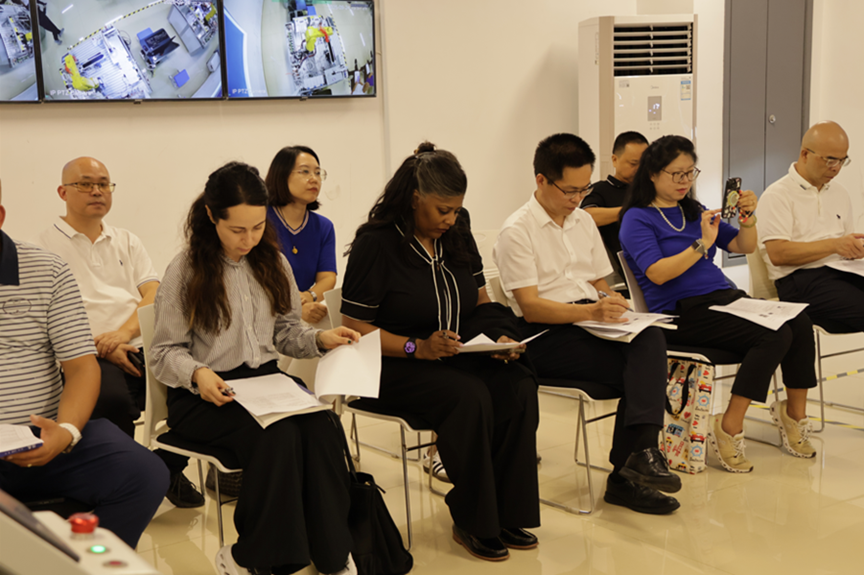
College leaders attended the entire demonstration class. During the hands-on session, they interacted directly with students, and kindly inquired about their learning experiences and the challenges they encountered during operations. In response to students’ questions about the stability of collaborative operations between visual inspection and industrial robots, the leaders offered practical explanations with real production examples. They encouraged students to explore innovative solutions introduced in the bilingual textbook, to be bold in experimentation, and to cultivate creativity. The leaders also assessed the demonstration class against the evaluation rubric. After the class, the college leaders held in-depth discussions with the instructor, fully affirming the innovation of integrating industrial robotics with visual inspection technology in the course design and the effectiveness of the bilingual teaching model. They also provided valuable suggestions for further optimizing practical training, deepening the development of China-U.S. cooperative courses, and enhancing students’ international competence in solving real-world industrial robotics problems.
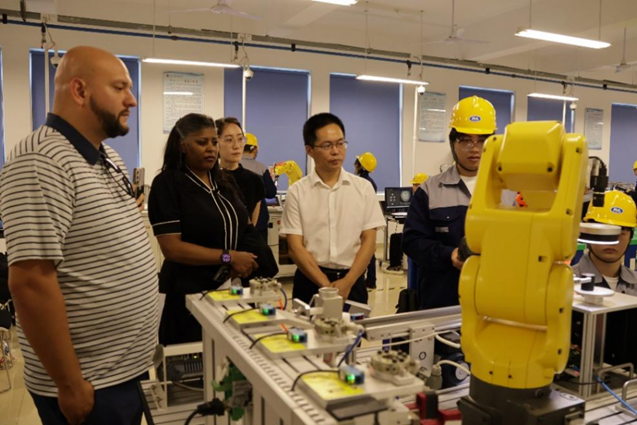
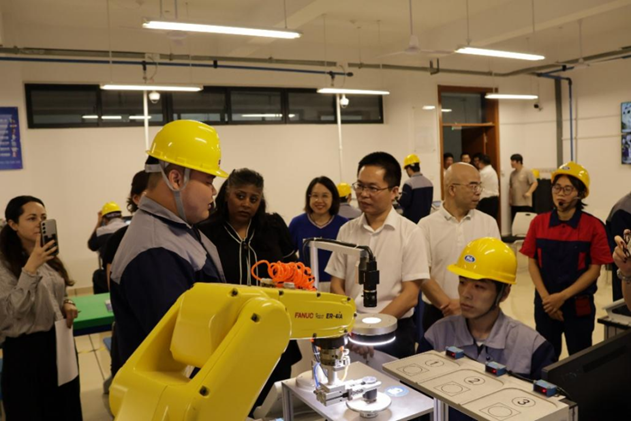
Representatives from the U.S. partner institutions demonstrated great interest in the demonstration class. During the observation, they frequently engaged with accompanying staff to learn more about the Industrial CAD curriculum, equipment configuration, and student training models. They spoke highly of the bilingual teaching approach and students’ practical abilities, noting that it aligned well with American teaching concepts and supported the cultivation of talent with global competitiveness. After the class, the U.S. representatives engaged in discussions with college leaders and faculty members, commending ZJITC’s practical achievements in teaching industrial robotics and machine vision inspection technology. They explored in depth how to further develop bilingual teaching resources, strengthen teacher-student exchanges in Industrial CAD talent training, and advance joint curriculum development and mutual credit recognition in future cooperative programs. Both sides agreed that this demonstration class not only showcased ZJITC’s teaching strengths in intelligent manufacturing of industrial robots but also laid a solid practical foundation for the China-U.S. joint education program in Industrial CAD. They look forward to expanding cooperation into more fields in the future to jointly cultivate highly skilled technical and professional talent capable of meeting demands of global industrial development.
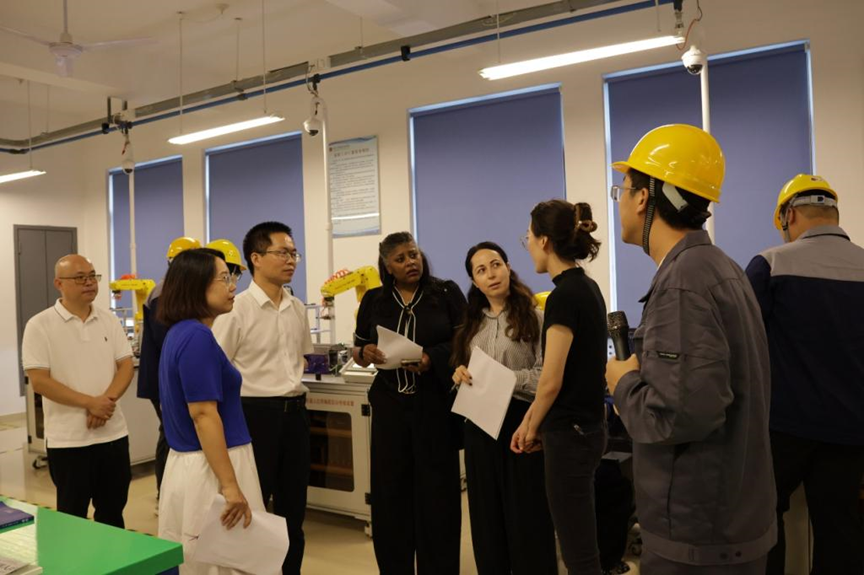
The successful demonstration class has not only provided students with a platform for practical innovation but also built a solid bridge for academic exchanges and cooperation between ZJITC and its U.S. partner institution in Industrial CAD. Looking ahead, ZJITC will continue to deepen international education, promote teaching reform and innovation, and leverage the strengths of the China-U.S. joint education program to integrate high-quality international educational resources. The college aims to cultivate more highly skilled professionals in Industrial CAD, who possess a global vision and cross-cultural communication skills, meeting the needs of the intelligent manufacturing industry and elevating the joint education programs to new heights.



