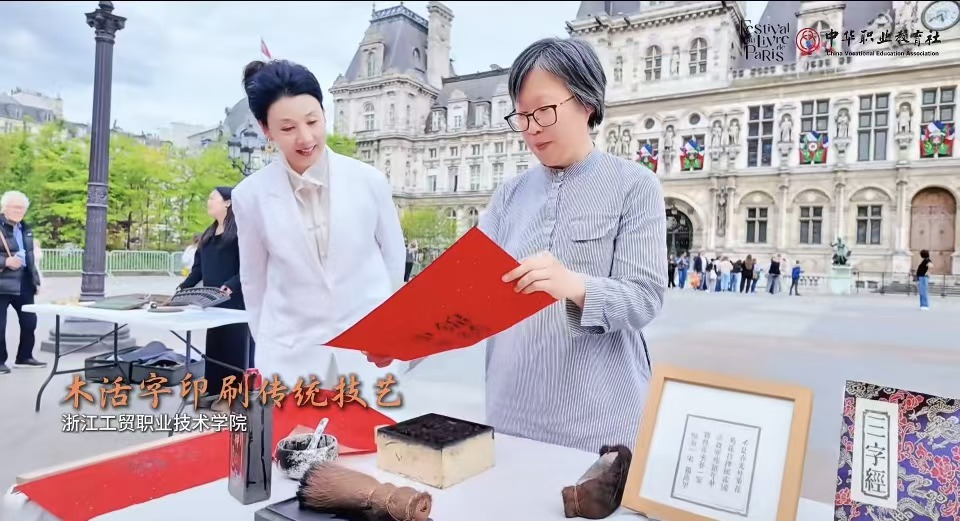
Recently, the exhibition China in the Classics – Teaching Achievements in Intangible Cultural Heritage in Chinese Vocational Education was held at the Paris Book Festival in France. The event was organized by the Vocational Guidance Center of the China Vocational Education Association under the guidance of relevant authorities. Professor Wang Chunhong, head of the Wooden Movable-Type Printing Studio at Zhejiang Industry & Trade Vocational College (ZJITC), was invited to attend the event. She presented both the traditional craft of wooden movable-type printing and the college’s teaching achievements. Her demonstration became one of the cultural highlights of the festival. It is reported that, upon recommendation by the provincial and municipal branches of the China Vocational Education Association, only two higher vocational colleges and one secondary vocational school in Zhejiang Province were selected for the exhibition.
The Paris Book Festival brought together over 1,000 institutions and representatives from more than 100 countries and regions, serving as a major international platform for cultural and educational exchange. Renowned for its high visibility and broad influence, the event was inaugurated by French President Emmanuel Macron, who attended the opening ceremony.
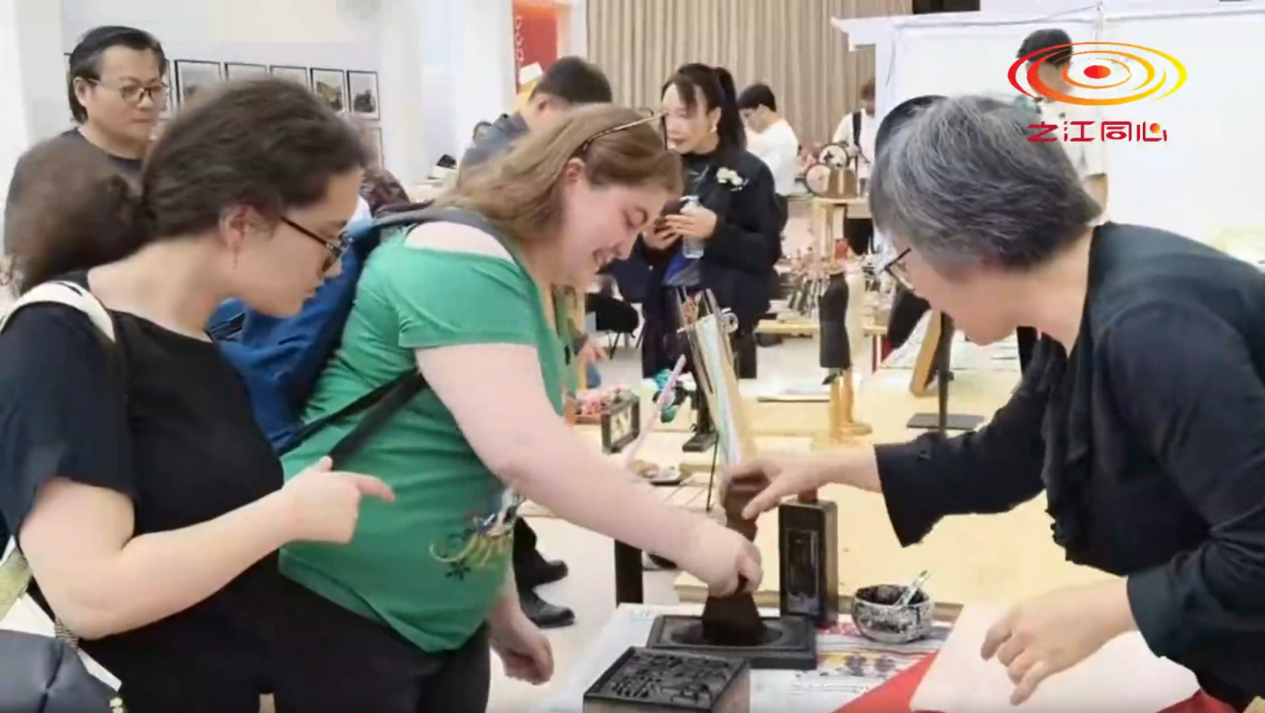
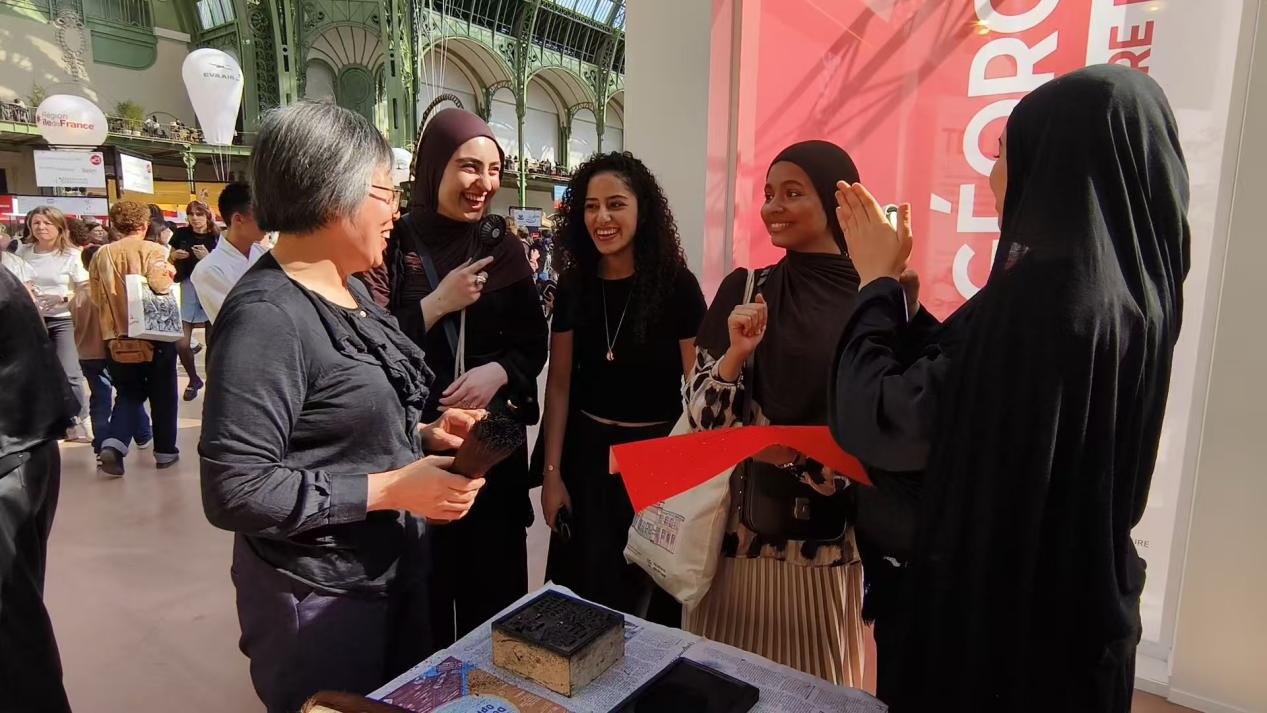
During the exhibition, a printing plate carved with the four Chinese characters “Jin Xiu Zhong Hua” (锦绣中华), featuring the traditional craft of wooden movable-type printing, became a highlight for many international visitors. “What kind of craft is this?” “How are these four characters pronounced, and what do they mean?” In response to the steady stream of questions from curious visitors, Professor Wang patiently explained: “This is wooden movable-type printing — one of the Four Great Inventions of ancient China. ‘Jin Xiu Zhong Hua’ conveys the magnificence of China’s landscapes and the brilliance of its civilization.” Many visitors expressed genuine admiration after learning about the technique, eagerly practicing the pronunciation and queuing to try the process themselves. Through asking questions, listening to explanations, and taking part in hands-on printing, they not only experienced the unique charm of China’s ancient printing culture but also developed a keen interest in the profound meaning embodied in the four characters “Jin Xiu Zhong Hua.”
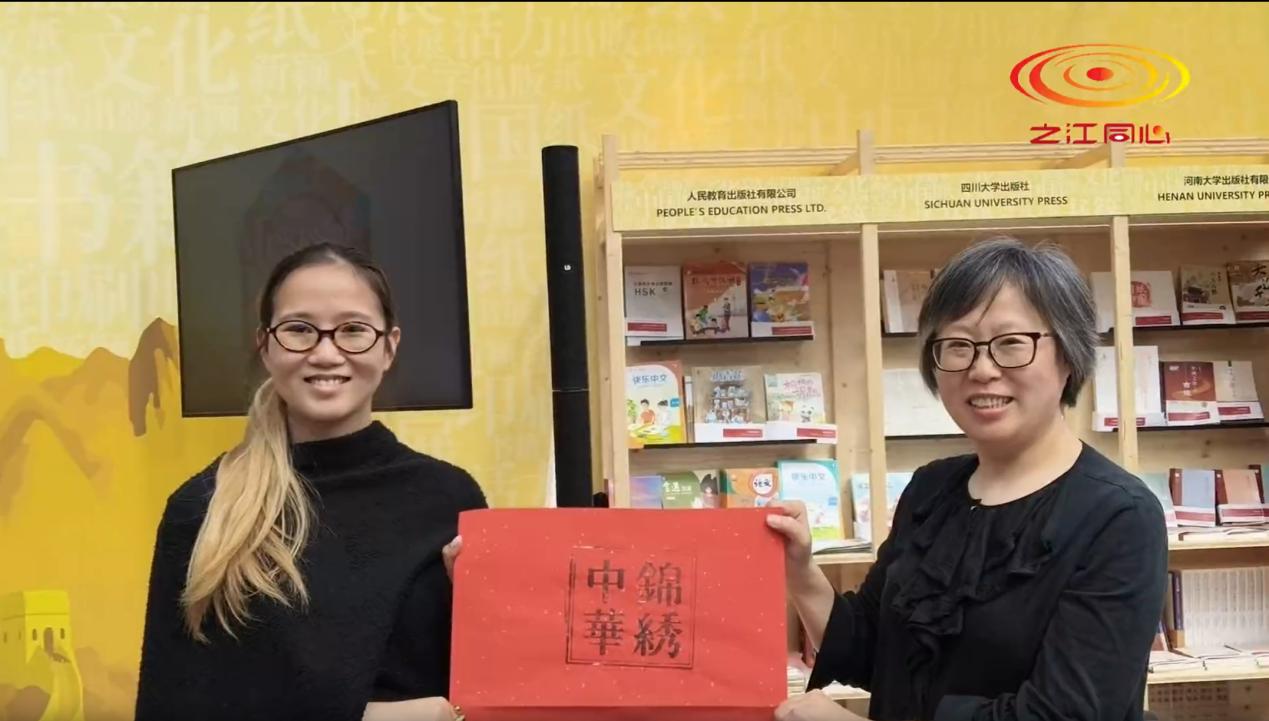
As the head of the Studio and the Center for Printing Techniques and Cultural Research, Professor Wang Chunhong has devoted more than a decade to the teaching, research, promotion, and public outreach of wooden movable-type printing. She has gradually developed an innovative approach to the inheritance and revitalization of intangible cultural heritage in higher vocational education, reflecting ZJITC’s distinctive strengths. Her achievements have been widely recognized. Her work has been selected as a Ministry of Education’s Demonstration Course of curriculum-based ideological and political education, and included in the second batch of nationally planned vocational education textbooks under the 14th Five-Year Plan. She has also led a key provincial social science research project on “endangered and niche disciplines” in Zhejiang Province, and has been invited to appear on China Central Television (CCTV) programs on three occasions, earning wide recognition both within the college and throughout society
Printing is one of ancient China’s Four Great Inventions, and wooden movable-type printing has remained a living heritage in the Wenzhou area, where it has long been used to produce family genealogies. In 2010, the craft was inscribed on the UNESCO’s List of Intangible Cultural Heritage in Need of Urgent Safeguarding, underscoring its significant contemporary value and the urgency of its preservation. In early 2014, ZJITC, in collaboration with master inheritors from Dongyuan Village, introduced this ancient craft onto campus, and established the Wooden Movable-Type Printing Studio. This milestone marked the beginning of ZJITC’s ongoing journey to explore new pathways for the inheritance of intangible cultural heritage in higher education.
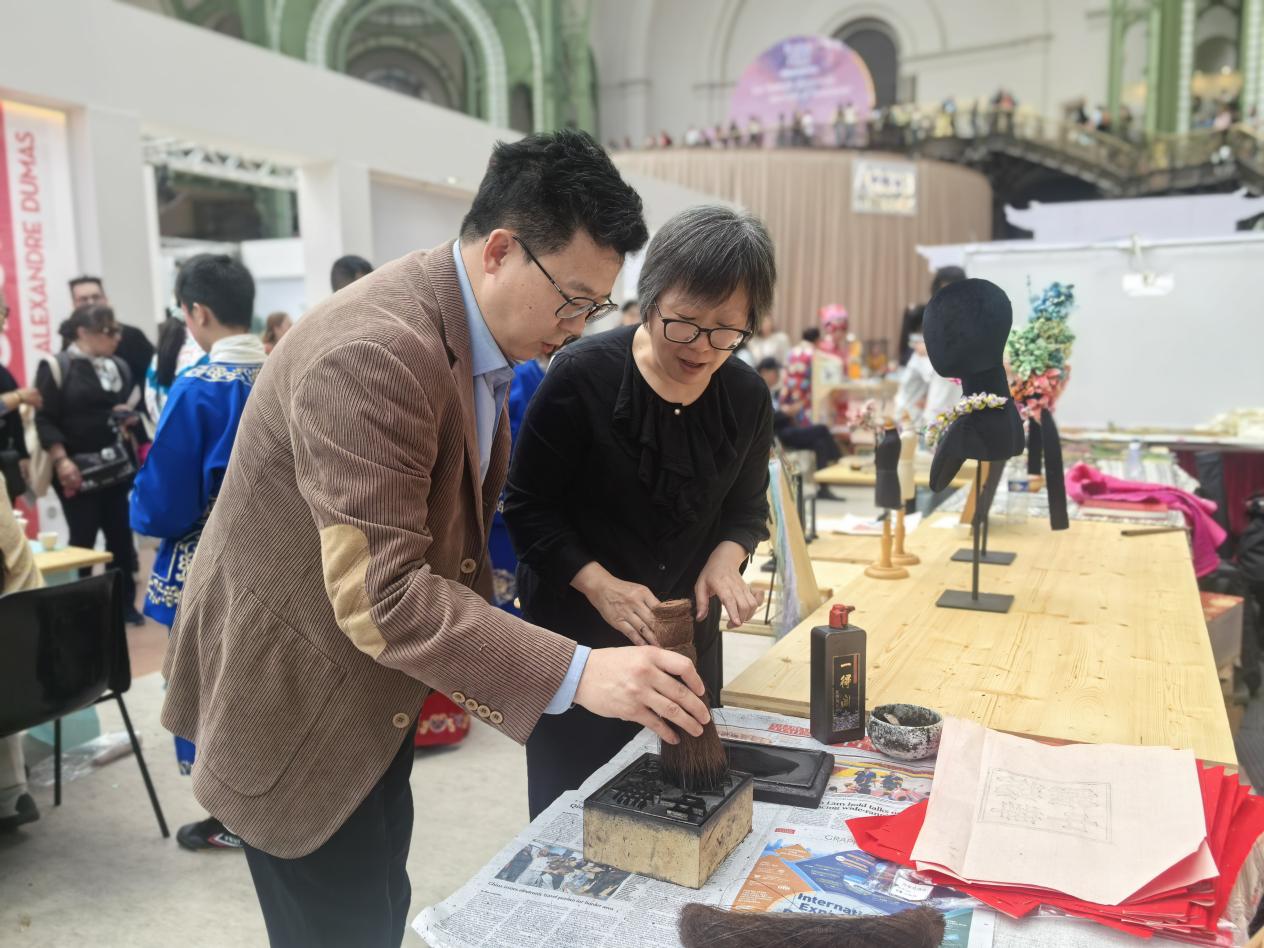
ZJITC has consistently attached great importance to the preservation and transmission of regional traditional crafts and culture. Rooted in regional development priorities and the college’s own educational philosophy, it has integrated fine traditional Chinese culture throughout the entire process of cultural education, effectively revitalizing the inheritance and innovation of intangible cultural heritage within higher vocational education. In recent years, ZJITC has been selected as one of the sixth batch of “Inheritance and Innovation Base Institutions for Chinese Arts and Crafts Masters,” and has received the Excellent School Award of the Ninth Huang Yanpei Vocational Education Awards. Its presence at the Paris Book Festival not only showcased ZJITC’s achievements in preserving intangible cultural heritage and cultivating skilled talent, but also highlighted the distinctive charm of Wenzhou’s traditional craftsmanship. The event offered an international platform for the college to present its distinctive features of vocational education and cultural dissemination, further enhancing its visibility in the fields of vocational education and cultural exchange both at home and abroad. By contributing its own “ZJITC’s strengths”, the college continues to share China’s stories and amplify China’s voice on the world stage.
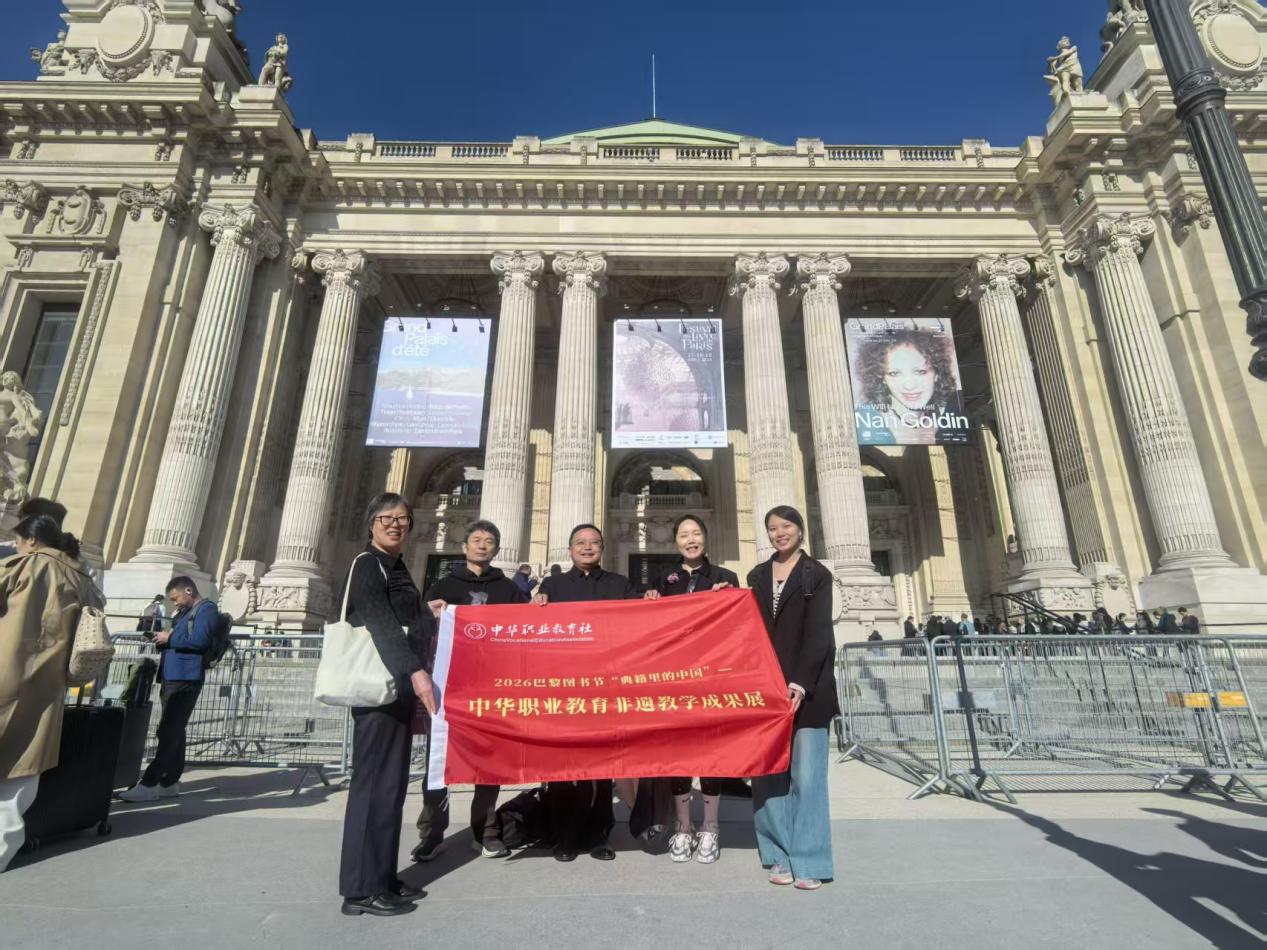
As a national organization that embodies the characteristics of unity, education, and public engagement, the China Vocational Education Association has long been committed to advancing reform and innovation in vocational education, while promoting the preservation and dissemination of fine traditional Chinese culture, and fostering international exchange of teaching achievements related to intangible cultural heritage. The China in the Classics exhibition is a vivid example of these efforts. By presenting a series of intangible cultural heritage projects that combine both intellectual depth and artistic excellence, and embody the spirit of Chinese civilization and core social values, the exhibition has built an important platform for showcasing China’s achievements in vocational education and innovation in heritage preservation, contributing to telling the story of Chinese vocational education to the world.



