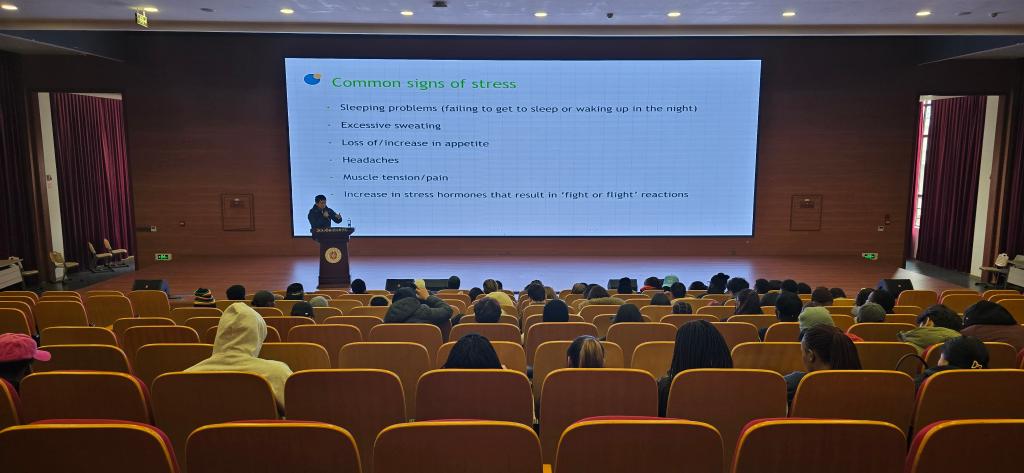
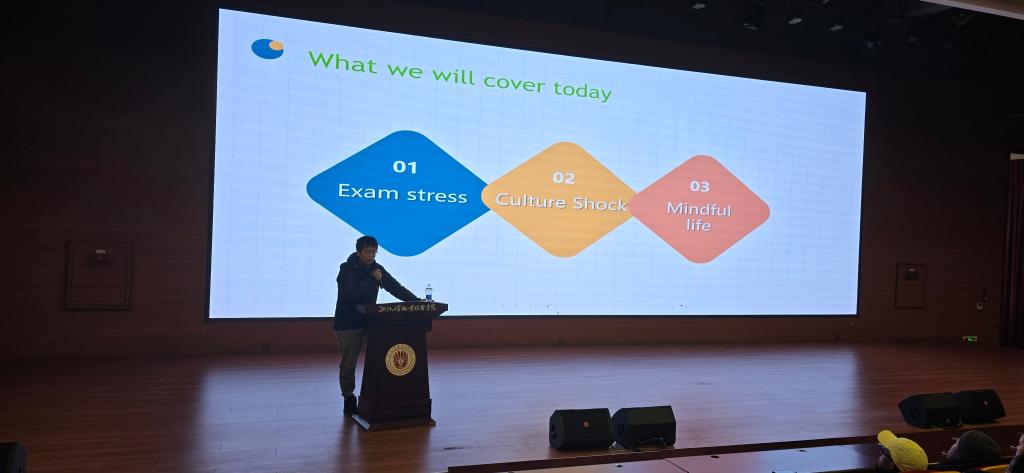
As final exams approach, some international students find themselves facing the dual challenge of academic pressure and cross-cultural adaptation. On January 4 from 1:00 to 3:00 p.m., the School of International Education held a lecture titled “Stress-Free Exams & Smooth Adaptation: Psychological Guidance on Exam Stress Relief and Cross-Cultural Adjustment for International Students” in the lecture hall of Jingting Building at the Oujiangkou Campus. Mr. Ye Zhaixiang, a licensed psychotherapist from Wenzhou Seventh People’s Hospital, was invited to deliver a targeted and practical lecture. He began with warm and accessible language, which quickly built rapport with the audience. The lecture was structured around three core themes: coping with exam-related stress, navigating cross-cultural adjustment, and promoting mindfulness in everyday life.
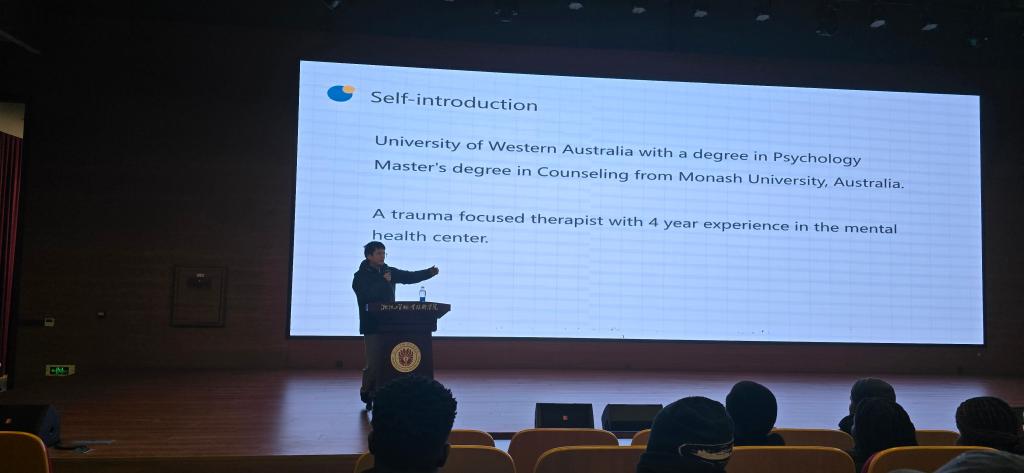
In the first module, focusing on coping with exam-related stress, Mr. Ye clearly explained the nature of stress and identified common challenges faced by international students, such as anxiety during revision, preparation difficulties arising from language barriers, and excessive worry about academic performance. To address these issues, he introduced his five-dimensional stress-management framework — Giving, Learning, Awareness, Action, and Connection — encouraging students to relieve stress by helping others, reviewing efficiently, recognizing emotional changes, taking concrete and practical steps to address problems, and establishing supportive interpersonal relationships.
The second module on cross-cultural adjustment resonated strongly with the audience. Mr. Ye systematically outlined the five stages of cultural shock: the honeymoon, culture shock, initial adjustment, mental isolation, and acceptance and integration. Drawing on real-life experiences of international students in China, he analyzed the typical characteristics and common challenges of each stage. For example, during the culture shock phase, students may struggle with language barriers and lifestyle differences. Mr. Ye advised students to seek help from teachers and peers and to actively participate in campus cultural activities. In the mental isolation phase, he suggested maintaining regular contact with family and building cross-cultural friendships to ease loneliness, thereby helping students recognize their own stage in the adaptation process and take proactive measures.
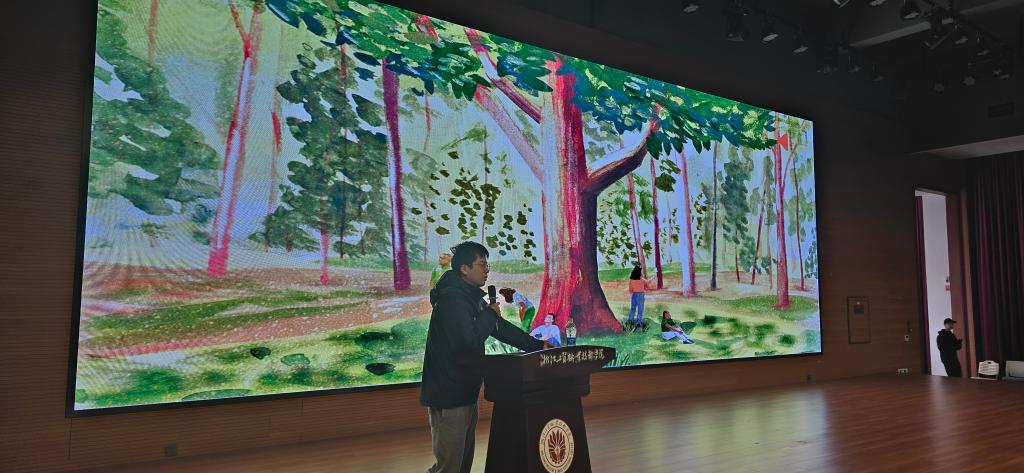
In the final module, centering on mindful living, Mr. Ye emphasized the principle of carpe diem (living in the present), encouraging students to let go of regrets about the past and anxieties about the future. He demonstrated simple yet effective mindfulness techniques, such as three-minute deep breathing and five-sense awareness, guiding participants through real-time practice to help them quickly refocus and regain calm.
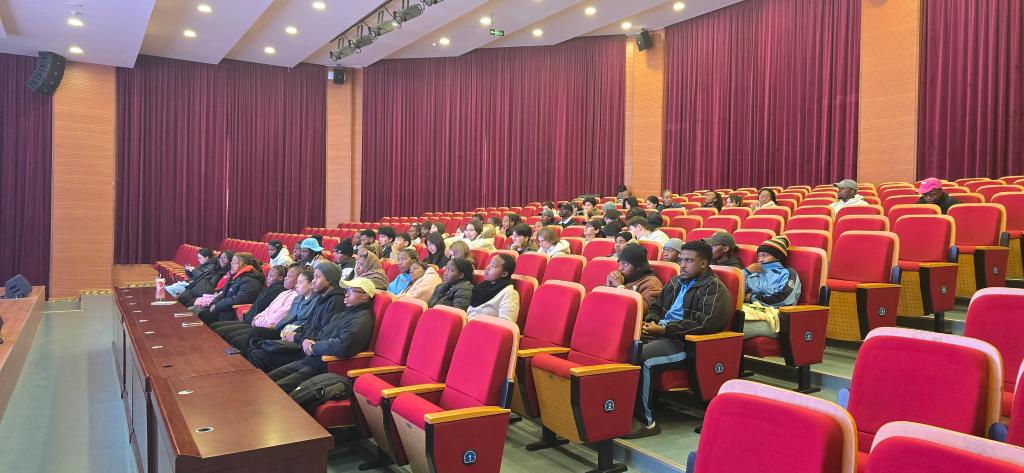
Throughout the lecture, students listened attentively, took notes and nodded when key points resonated with their own experiences. During the interactive Q&A session, questions ranged from “How can I stay focused while preparing for exams?” to “How can I improve communication with Chinese classmates?” Mr. Ye responded patiently, offering specific and practical advice. The open and supportive atmosphere enabled students not only to release psychological pressure but also to adopt useful coping strategies.
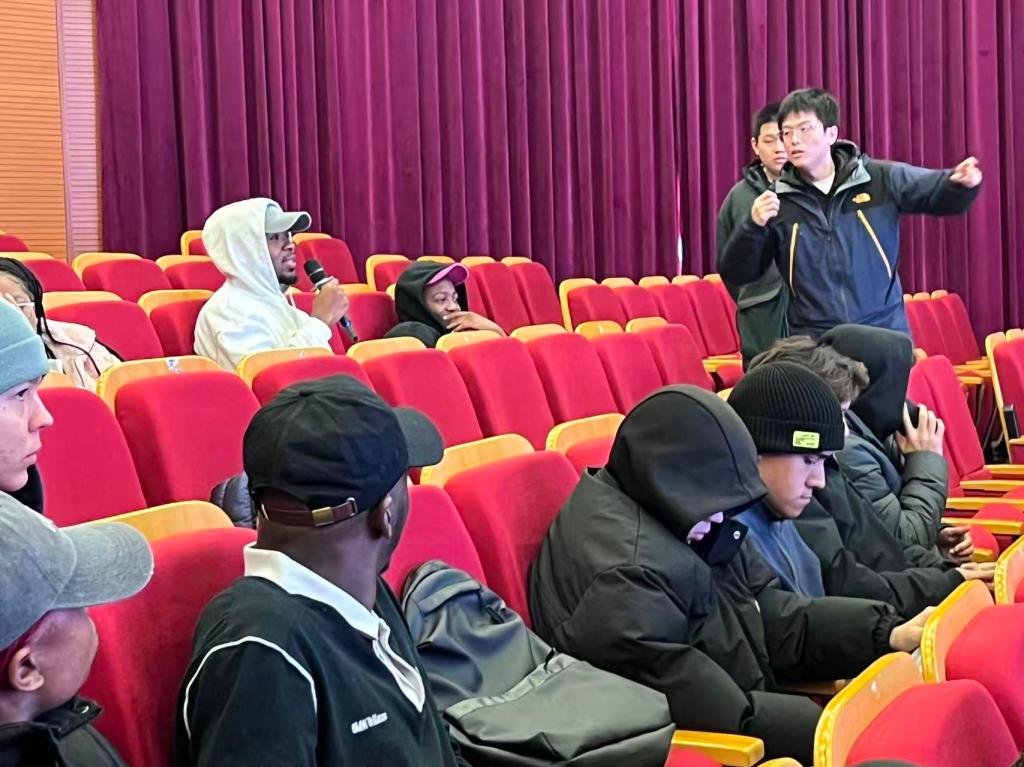
When concluding the lecture, a representative from the School of International Education noted that the event had precisely addressed the psychological needs of international students, providing both immediate relief and long-term guidance. The school will continue to prioritize students’ mental health, expand psychological support platforms, and assist every international student in developing positive coping mechanisms — encouraging them to study with mindfulness and grow with joy at ZJITC.