PART 01 Lunar New Year’s Shopping Festival
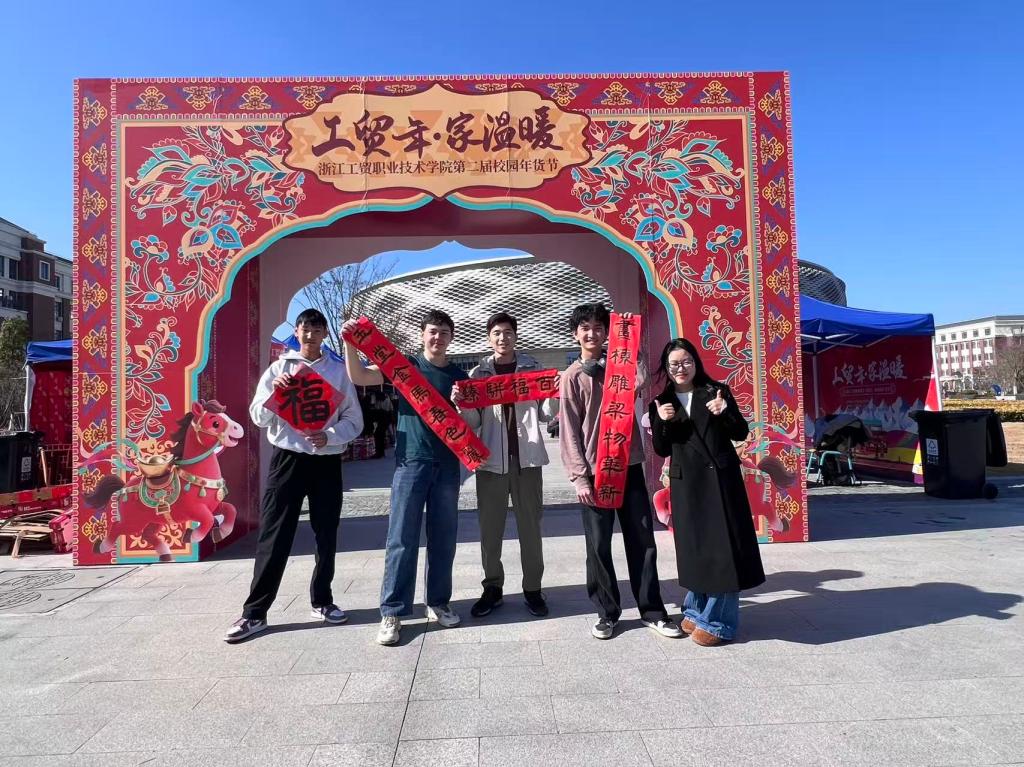
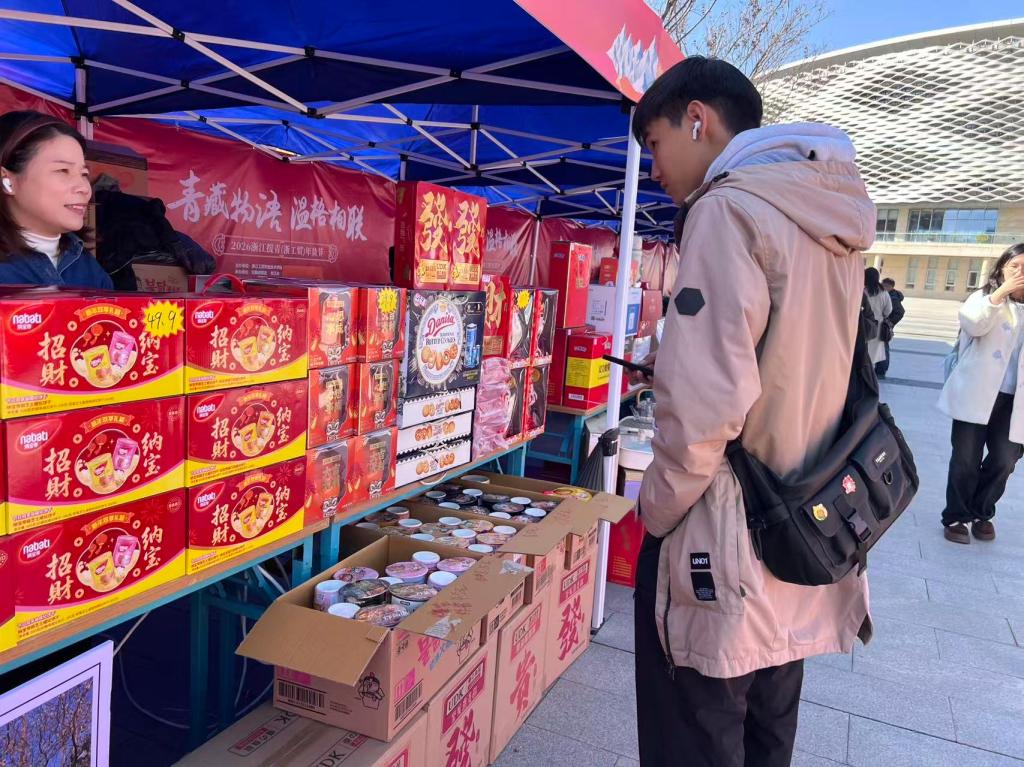
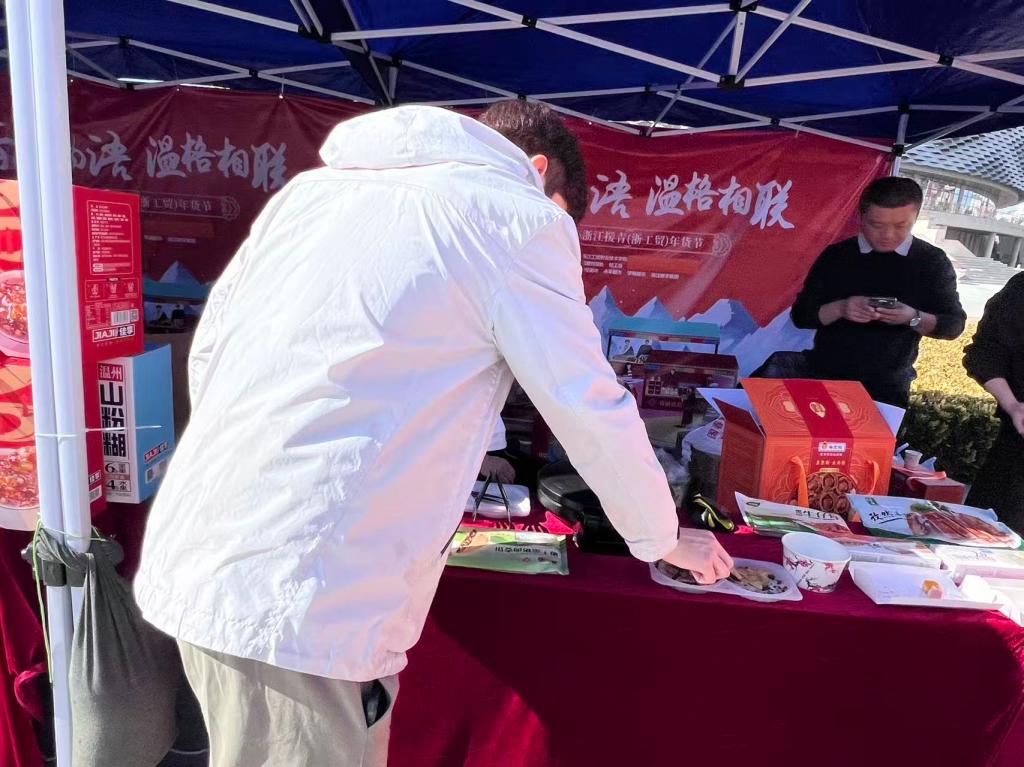
Recently, Zhejiang Industry & Trade Vocational College (ZJITC) came alive with its bustling Lunar New Year’s Shopping Festival. Rows of stalls lined the venue, and enticing aromas filled the air, bringing a joyful festive atmosphere to the campus. International students from the School of International Education eagerly joined the event, moving between booths, tasting special holiday treats and immersing themselves in the unique local customs and festive vibe of the celebration.
PART 02 Pasting Spring Festival Couplets
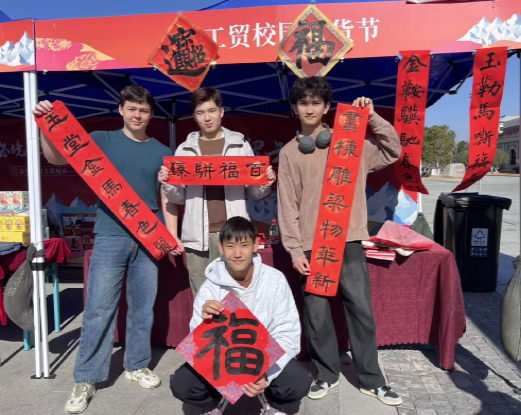
In another corner of the event, tables were neatly prepared with red paper, brushes, and ink. Rows of freshly written Spring Festival couplets and fu character (福, meaning “blessing” or “good fortune”), brimming with good wishes, drew many international students to stop, admire and pick their favorites. Both the couplets and the fu character embody Chinese people’s sincere aspirations for the new year ahead — a core meaning behind the tradition of putting them up in celebration of the Chinese New Year. Spring Festival couplets (Chun Lian), also known as “door couplets (Men Dui)” or “spring posts (Chun Tie),” are a hallmark of the celebration. People write poetic, antithetical lines on red paper to express hopes for health, harmony and career success. While the fu character symbolizes good fortune and happiness, pasting it on doors or walls is to invite blessings into people’s homes. There is also an interesting folk custom of pasting fu upside down (Fu Dao)— the character “Dao” (倒, meaning “upside down”) is homophonic with “Dao” (到, meaning “arrive”), implying “blessings have arrived” and expressing the wish for blessings to grace the household in the coming year.
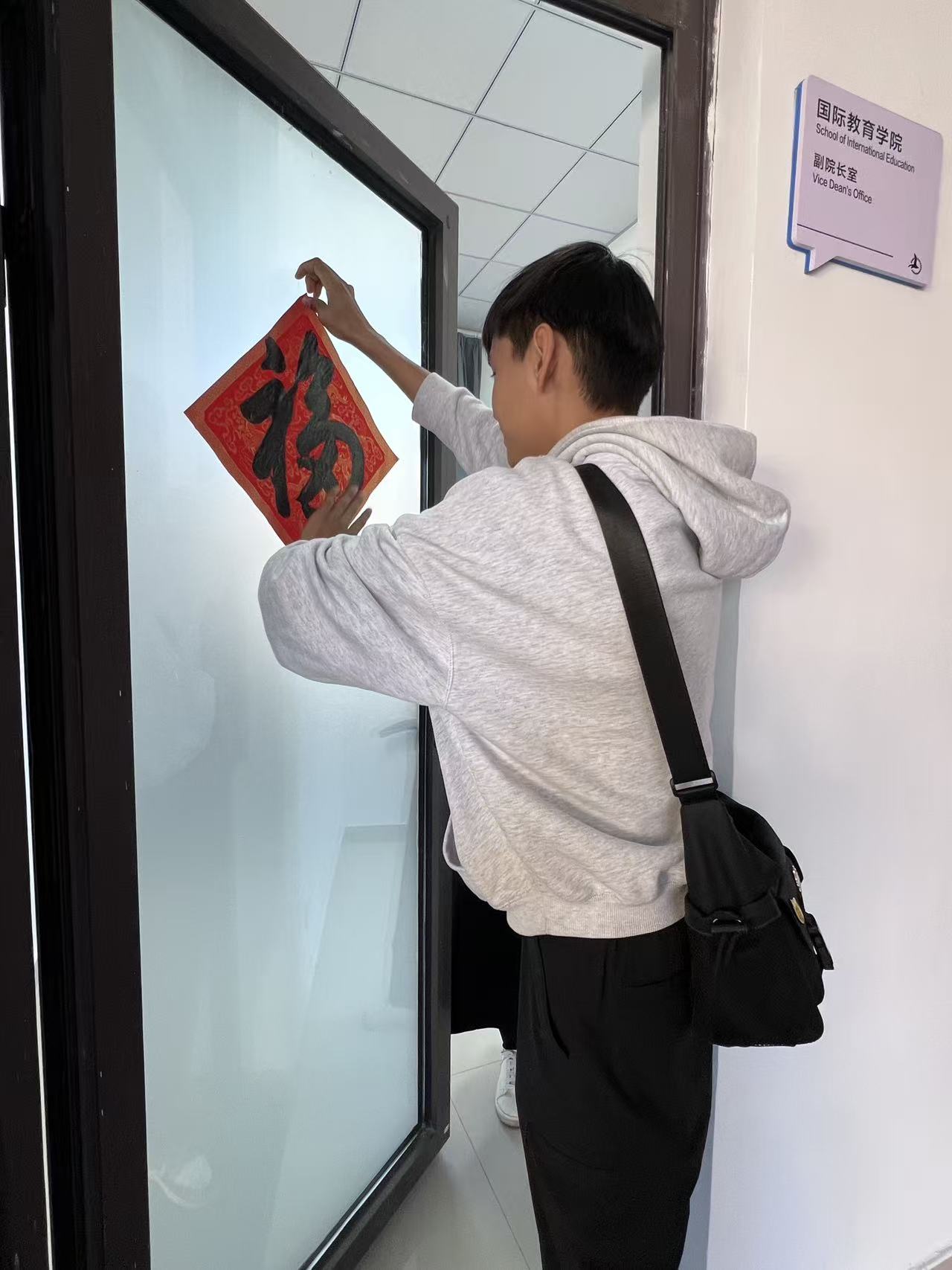
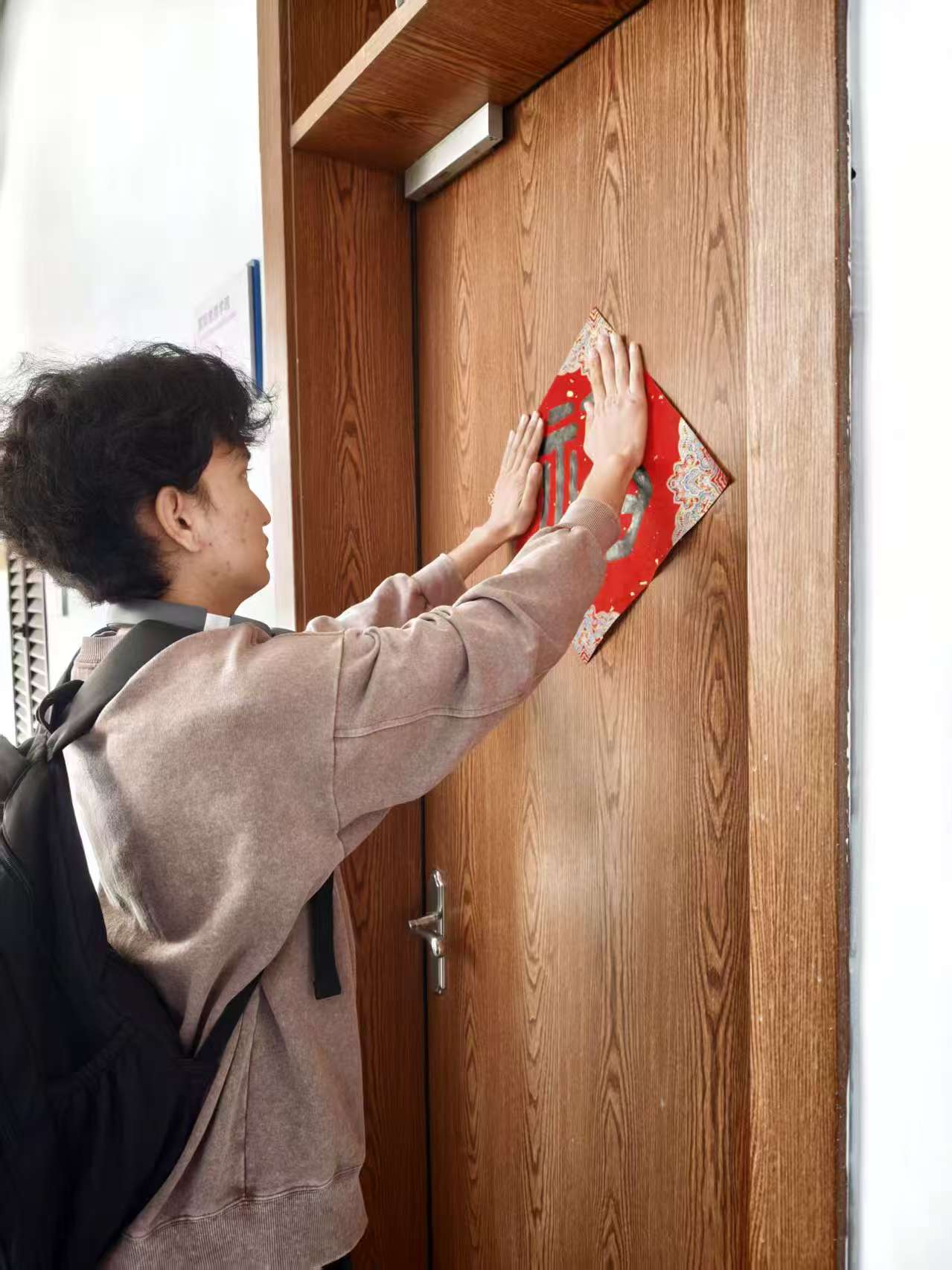
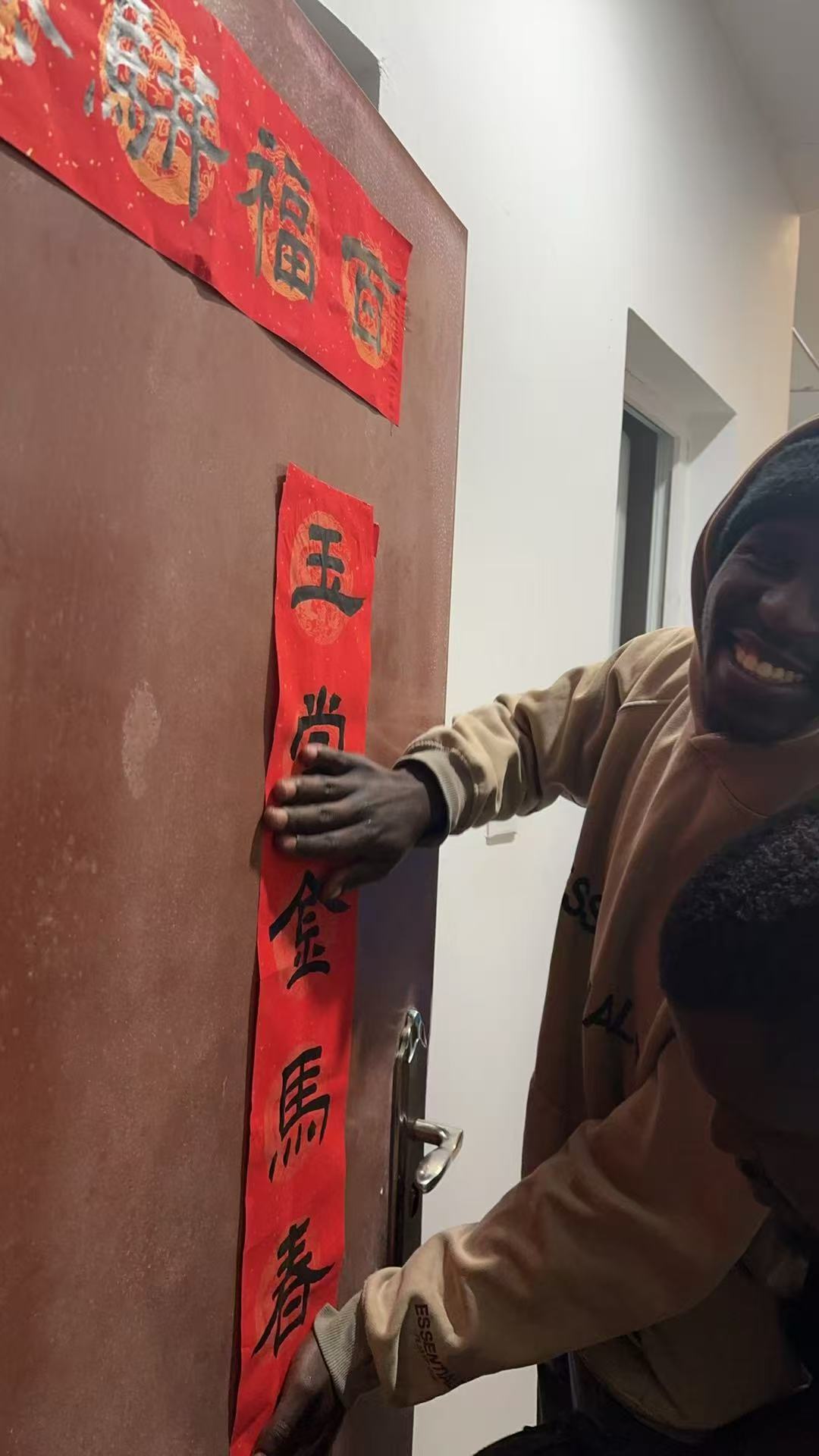
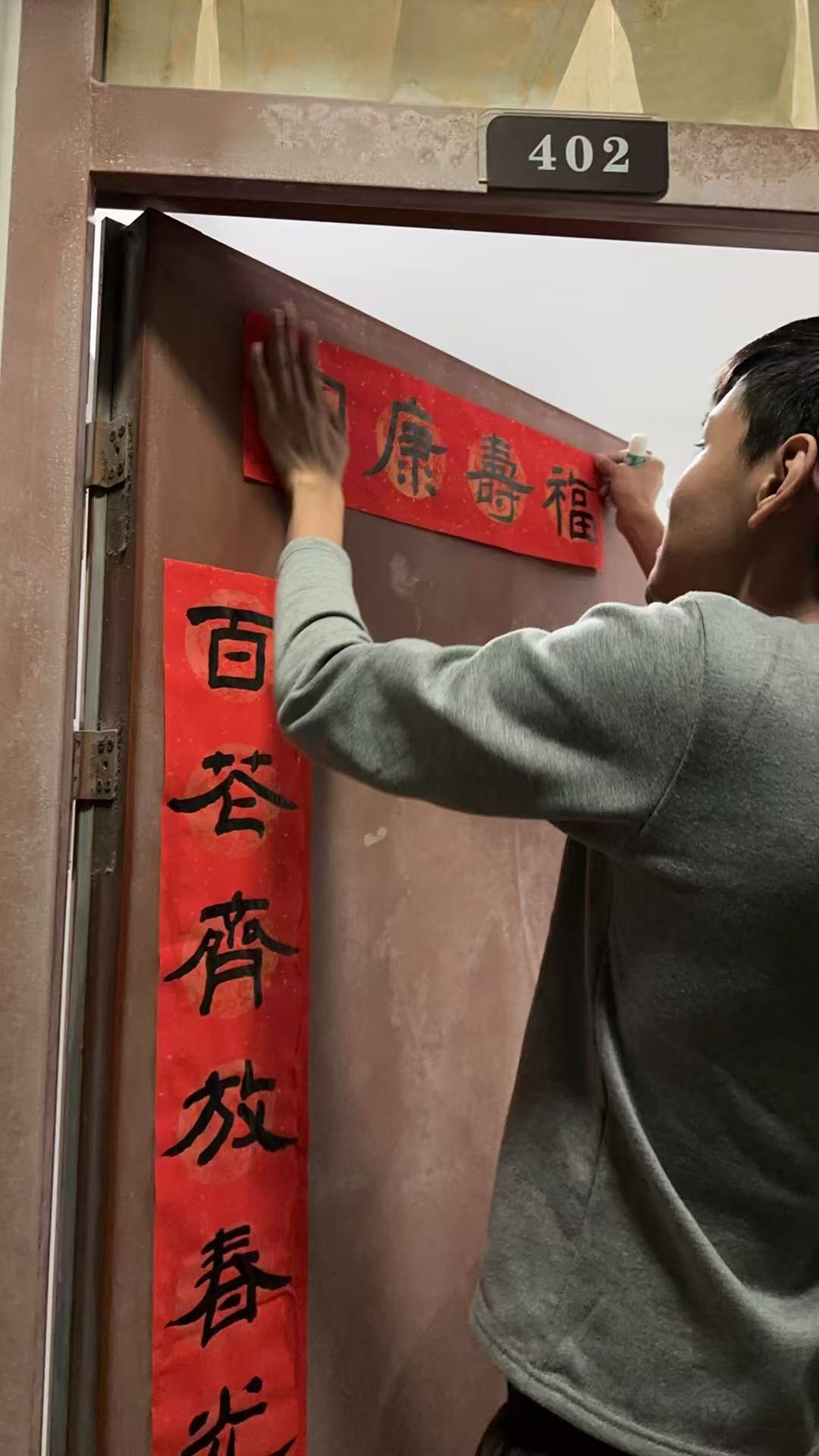
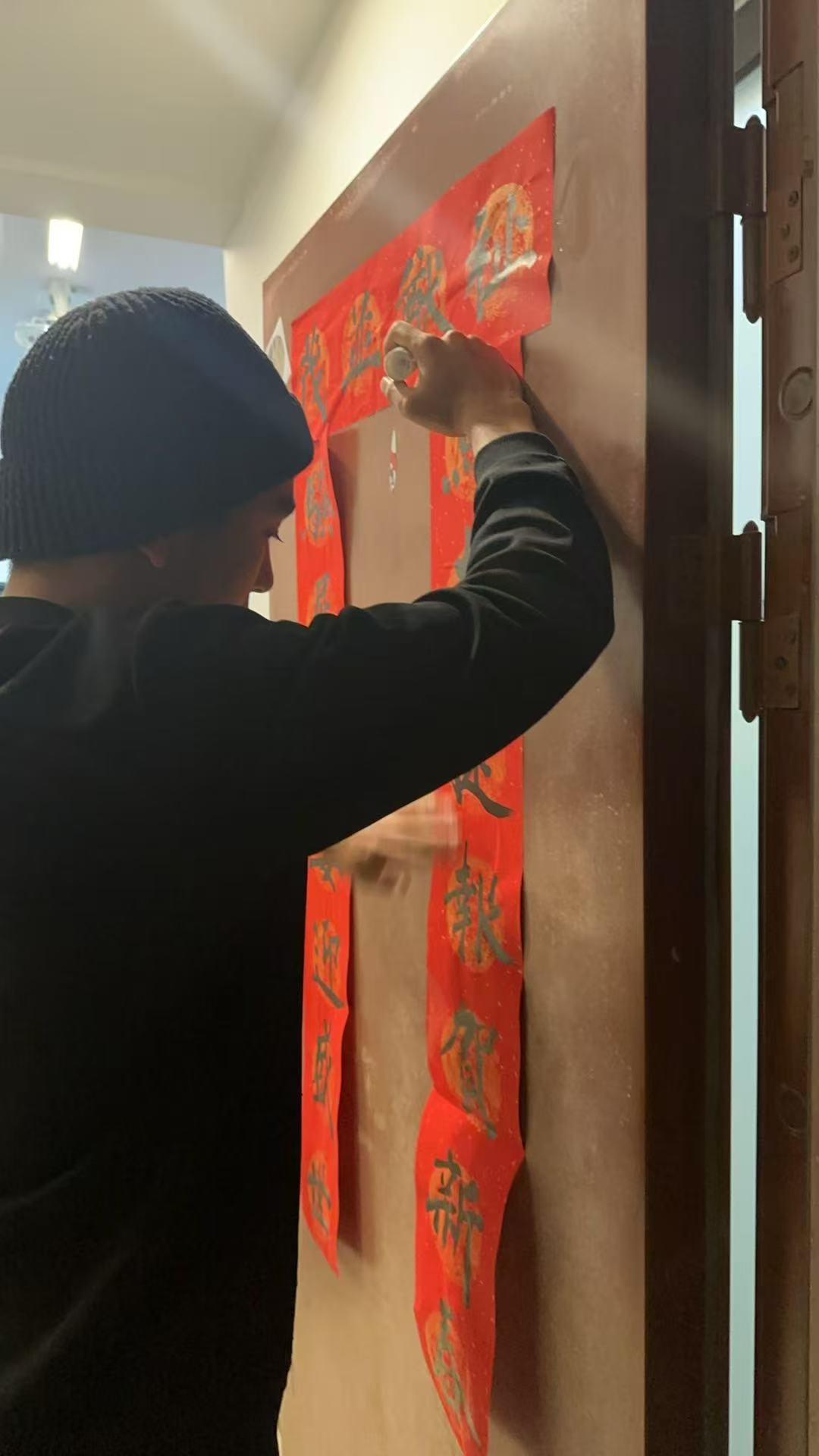
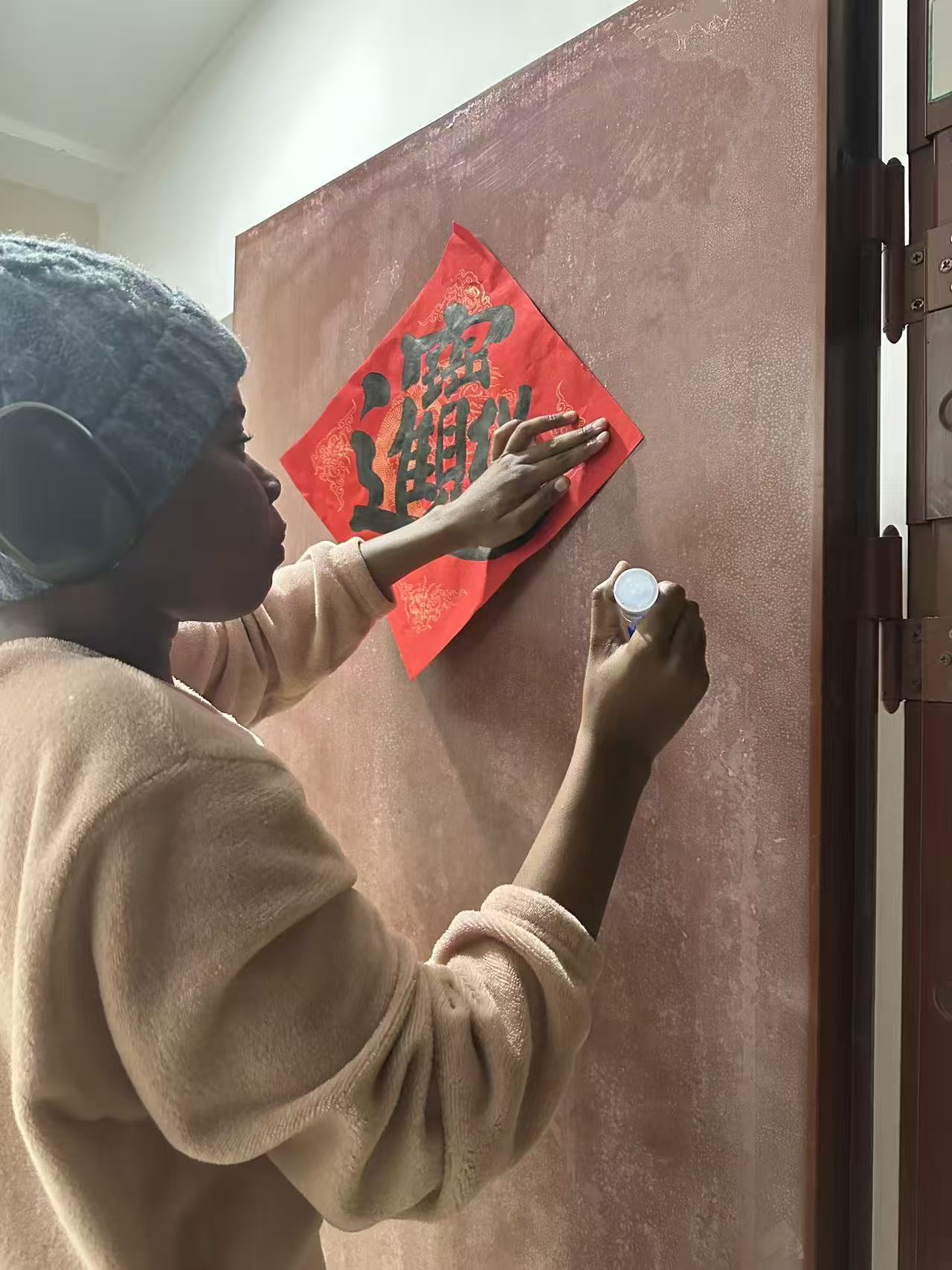
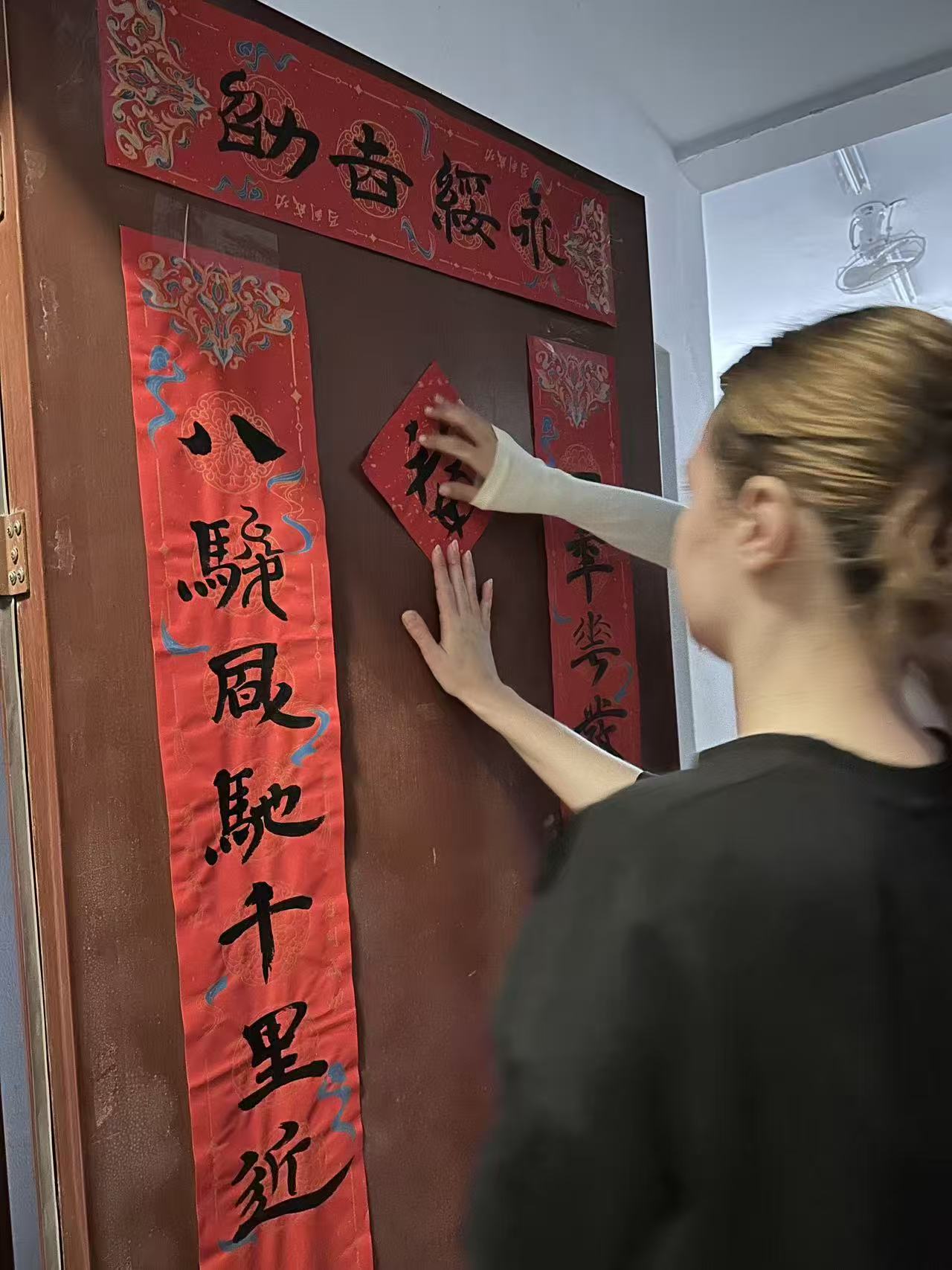
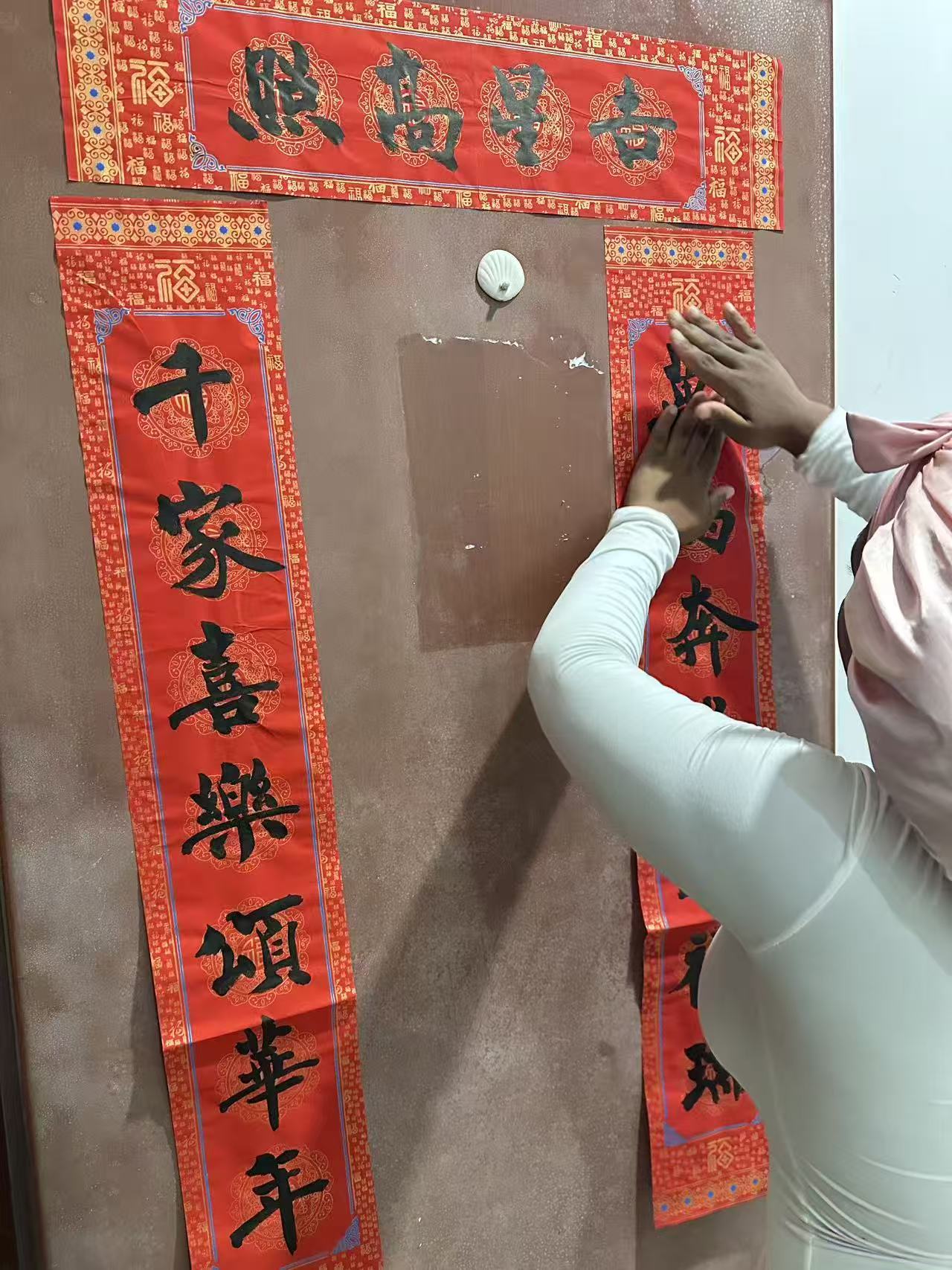
With beaming smiles, the international students joined teachers in putting up these “red-paper wishes.” Working in small teams, they pasted the couplets and the fu characters on doors and walls, soon transforming offices and dormitories into lively and festive areas. This event offered international students an immersive experience of traditional Chinese New Year customs, encouraging them to enjoy the vibrant festive atmosphere and cultural charm, and to appreciate the heartfelt hopes Chinese people hold for the coming year. More importantly, it became a moment of connection and comfort — allowing those far from home to feel a sense of warmth and belonging — to create cherished Spring Festival memories on campus.